



The Divine Solution vs. Man’s Schemes
Paid subscribers to Michael Hoffman’s Revelation of the Method Substack column have full access to an archive of more than 180 studies by Mr. Hoffman.
The Economics of the “Sons of the Most High”
Permit me to define my term: the sovereign power of money in America on the part of those who wield it was revealed for all to see in the successful campaign to defeat Rep. Thomas Massie’s reelection in Kentucky. Three plutocrats and two lobbying groups were mainly responsible for spending an estimated $35 million to help a non-entity, President Trump’s lackey Ed Gallrein, win the Republican primary in a district where Democrats typically are not elected.
Mr. Massie is as close to Jefferson and Madison as one will find in the 2026 House of Representatives, yet it was capital in the hands of despots — not the virtue and excellence of the challenger — that decided the race.
Since more distracting nonsense and worthless remedies have been written about economics than almost any other subject, I will focus on incontrovertible fundamentals which are seldom if ever mentioned.
The Renting of Money (“Usury”) is at the Root of the Rule of this Sovereign Power
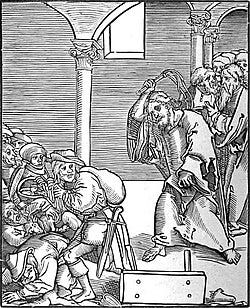
Both Catholic and Protestant popular treatments of the issue are often hopelessly muddled. Catholics typically blame Protestants for first relaxing the prohibitions when it was Papalist Romanists who have the dishonor.
We observe the muddle in the manner in which a late start is assigned to the history of the “cash nexus.” It is typically dated, as Ezra Pound did, to the Protestant Bank of England (17th century), or the rise of the banking house of Rothschild in the 19th.
Make no mistake: we will not gain victory in this struggle until the name Fugger is at least as notorious as Rothschild.
A better alpha point would be the first century A.D. followed by the emergence, centuries later, of the relaxation of the Catholic ban on usury, the prime engine of Mammonism, beginning in the late 1400s.
In earlier ages, the spirit of the Gospel as channeled by the Church suppressed usury.
Permission for usury first arose in the Catholic “Nominalist” school of theology, heavily subsidized by the Catholic Fugger banking dynasty (1480-1550). Its mouthpiece was Rev. Fr. Johann Eck, Dean of the Faculty of Theology at the University of Ingolstadt, who lobbied for a “moderate” rate of interest (5%).
The Serpent of Situation Ethics Enters Western Civilization
When I denounce even a rate that low I am accused of being unreasonable by those who are blind to the sinister implications of even a 1% interest rate given that they overlook the toxicity behind so much of the subversion of the Word of God—situation ethics.
A textbook illustration of situation ethics is available to us in the first century A.D. with Rabbi Hillel’s nullification of the Bible’s debt-remission plan forbidding any contractual renting of money (“loan”) beyond seven years. This had been God’s way of preventing the onerous burden of perpetual debt peonage among His people, an ungodly burden which Christians suffer in our time.
Deuteronomy 15: 1-2: “At the end of every seven years you shall grant a release of debts. And this is the manner of the release: every creditor who has lent anything to his neighbor shall release it; he shall not require it of his neighbor or his brother, because it is called Yahweh’s release.”
The fact that the Judean and Israelite peasants (am ha’aretz עם הארץ), possessed this divinely endowed liberty severely discomfited the loansharks of the first century.
To accommodate these avaricious creditors, Hillel the halachist (law giver) issued his פרוזבול (“prozbul”)—an escape clause proclaimed in the name of the “betterment of the world.”
How did Hillel “better” it? His situation ethics corrected God’s “mistake,” in this case the Sabbatical, every-seventh-year loan expiration, by permitting to lenders an extension of the enforcement of their loans beyond seven years. Hillel concocted his prozbul to circumvent a direct Torah command.
The Pharisee Hillel (the most admired of all Pharisees in the eyes of the liberal non-Christian and pretend-Christian establishments), founded a situation ethics system long before it influenced avant-garde Nominalist theologians in the Renaissance papal Church — and later among Protestants.
When in the late 15th century Catholic Nominalists were promoting a “moderate” rate of usury they were opening a Pandora’s box of situation ethics.
If it is permissible to charge a low rate for the mortal sin of usury then by the same casuistry it would be permissible to frequent a prostitute who charges a moderate fee for the mortal sin she offers.
There is no end to this lackadaisical chain of situations for everyone’s “betterment.” Under this umbrella, a couple may cohabitate without benefit of marriage because God’s law in the matter of fornication is an ideal, not a command. The situation ethicist is adept at fabricating a multitude of rationales and loopholes.
Reformation luminaries were influenced by Nominalist arguments. Among the latter, the most significant was the Catholic-born French Protestant convert and lawyer turned theologian, Jean Cauvin (“John Calvin,” 1509-1564), who drew inspiration from the French Catholic jurist Charles du Moulin (1500-1556) and Moulin’s popularizer, Francois Hottman.
Moulin was influenced in turn by Conrad Summenhart, a professor at the papal Tübingen University in Germany . He derived from Summenhart the belief that all loans at interest were not wrong; rather they were to be judged by the situation of the borrower.
The argument proceeded as follows: as long as the interest charged was “reasonable” there was nothing immoral about lending for the purpose of “increasing productivity.” Moulin and his successors went so far as to reverse Lateran Councils II (1139) and III (1179) and the Council of Vienne (1311–1312), stating that the borrower who does not pay usury on productive capital is stealing from the lender (cf. Tractatus contractum et usurarum, 1547). This great betrayal, as it spread through the hierarchy of the Church, contributed markedly to the gradual ascendance of the sovereign power of money.
It was from this Roman milieu that Calvin formulated his doctrine. This supposed premier scripturalist, who relentlessly attacked and mocked Catholics for holding tradition on par with the Bible, based his economic teaching on the traditions of lawyer’s equity, which nullified the Old Testament ban on usury. Calvin, a latter-day Hillel in this particular instance, declared that Old Testament laws were not binding on Christians in terms of an absolute prohibition on interest charged to fellow believers:
“I now conclude that one must not judge usuries according to some certain and particular pronouncement of God but only according to the rule of equity”
(De Usuris, 1545).
“I am unwilling to condemn [usury], so long as it is practiced with equity and charity.”(“Letter to Claude de Sachin, 1545).
“This law [Deuteronomy 23:19] is political and has no more bearing upon us now than equity and human reason carry. Of course it would be good to desire that usurers were expelled from the entire world and that the name became unknown. But since that is impossible we must submit to a common utility.” (De Usuris, op. cit.).
The paradox of Calvin consisted in the fact that personally he was repelled by riches, could not be bribed, and in the early years of the Calvinist citadel of Geneva, Switzerland all usury was forbidden. Even the pope conceded this: “The strength of that heretic consisted in this, that money never had the slightest charm for him. If I had such servants my dominion would extend from sea to sea” (Pope Pius IV, 1564).
Calvin could not derogate Christ’s teaching as he had that of Moses. Consequently, concerning Christ’s teaching in the Gospel of Luke, he seized on the Catholic Nominalist distinction between interest and “biting” interest.
While Calvin had formulated an acceptance of usury hedged by strict qualifications, it was observed by R.H. Tawney that mission drift was bound to occur: “Mankind finds in the arguments of theorists what it looks for. Calvin’s indulgence to moderate interest…was remembered when the qualifications surrounding it were forgotten…”
“Biting” Interest on Loans
A teacher of Calvin, the Protestant theologian Martin Bucer (1491-1551), in his Tractatus de Usuris enlarged on the nominalists’ argument by proclaiming that the Hebrew word neshek, translated as usury, signified that only interest on loans that were so extortionate they “bit” the borrower, were the type of interest that was forbidden. This casuist falsification has framed the debate ever since.
Following Bucer, Protestant theologian Henry (Heinrich) Bullinger (1504-1575) stated, “Usury is forbidden in the word of God (only) so far as it bites his neighbor.”
Bucer and Bullinger were parroting the evasions of the Talmudists in this matter, as John Edwards exposed in his analysis of this fallacy:
“The rabbis distinguish between neshek and tarbith; the one, they tell us, is derived from a word that signifies to bite…and therefore they understand neshek concerning immoderate usury, such as is truly biting and devouring, and this they acknowledge is forbidden by the Law…But the other word, say they, which barely denotes increase, i.e. some overplus besides the principal, expresses the moderate and tolerable sort of usury…
“But this is a mere fancy, and has no foundation in the Holy Scriptures, for these condemn not only neshek, but tarbith…As for that word neshek, it is apparent that it is a general term for all usury; it is a common name whereby that practice is expressed in Hebrew: and it imports the greatness (severity) of the sin, not any distinction of the kinds of usury.” (John Edwards, D.D., Theologia Reformata (London, 1713), volume 2, pp. 547-548).
Bucer and Bullinger’s escape clause permitted evasion of God’s Law. Overlooked in their rationalizations was the traditional Christian belief that all interest, in and of itself, took a “bite” out of the borrower.
Anglican Bishop Lancelot Andrewes rightly observed that “All usury is biting…There is no form of usury that is toothless.”
Andrewes believed that the etymological neshek distinction “…contravenes the principle of the Law itself: ‘Thou shalt love they neighbor as thyself.’ For it is an evil rule that decrees, ‘let it be done provided it does not bite.’ Evil I say, and Pharasaic. This is Christian: let it be done provided it benefits. For whether it bites or not, does not matter, if we are looking for true justice; what matters is whether it benefits or not.” (Cf. Michael Hoffman, Usury in Christendom: The Mortal Sin that Was and Now is Not [2013], p. 189).
Andrewes was articulating a fundamental truth of authentic Christian economics — creating outcomes where everyone wins. Loans free of interest as well as the fair price and the just wage were bedrock early Church principles.
The Emergence of Buccaneer Capitalism
Some folks don’t want to work. The Right wing associates this sloth typically with the poor and exempts the class of idle people who get rich off bank credit, insider trading, and Capitalist cronyism.
An early 19th century example of buccaneer capitalism is found in the career of the bank-credit beneficiary David Ricardo. He was a bond trader in 1815, and as a creature of the Rothschilds he was a beneficiary of their insider trading in the Napoleonic period. The Rothschilds were money creators and major purchasers and underwriters of British and French government debt. As a result they could sometimes dictate to those governments and their royal houses policies they sought to implement or enforce.
The power of money creation is the essence of Money-ism which is sold to the public under the cosmetic euphemism, “Capitalism,” what Thomas Carlyle more accurately termed the Cash Nexus of free market Capitalism — “the shabbiest gospel ever preached…Cash payment has become the sole nexus of man to men…Money is miraculous… but also (see) what never-imagined confusions and obscurations has it brought in; down almost to a total extinction of the moral sense in large masses of mankind.”
Ricardo was what was known as a “political economist,” an unabashed mouthpiece for the Money Power and an enemy of British poor people and what we today term “welfare” aid (“poor laws”).
In his 1817 Principles of Political Economy and Taxation, in the chapter “On Wages,” Ricardo delivered a Scrooge-like assault: “The clear and direct tendency of the poor laws is…not as the legislature benevolently intended, to amend the condition of the poor, but to deteriorate the condition of both poor and rich; instead of making the poor rich, they are calculated to make the rich poor.” Ricardo’s ideology enshrined plutocratic corruption while casting poor people as shirkers and loafers.
His views were an enlargement of the Malthusian Principle which had been developed by a clergyman, the Rev. Thomas Robert Malthus in his infamous 1798 book, An Essay on the Principle of Population, as It Affects the Future Improvement of Society. Malthus argued that unchecked population growth, driven by white couples having too many children, inevitably produced competition for scarce resources.
He regarded welfare (poor relief) as counterproductive and “morally hazardous” because it weakened what he saw as the “natural checks” upon population growth (famine, disease, and poverty itself). In Malthus’s view, welfare policies encouraged early and “improvident” marriages by removing some of the natural disincentives for having large families.
He sought to reduce the population of impoverished British people through limitation of births. Because he was an ordained minister writing in an evangelical age he could only recommend periodic chastity in marriage as a means of birth prevention. And like Ricardo, he advocated the gradual abolition of Britain’s existing Poor Laws — rejecting any guaranteed right to food or housing for indigent families — in order to strengthen the incentives for what he termed “moral restraint”: later marriage and fewer children.
Ricardo and Malthus triumphed with Parliament’s enactment of the Poor Amendment Act of 1834 which, in the words of John Cassidy, “applied the harsh precepts of political economy to the labor market, presenting many impecunious members of the lower orders with a choice between starving and entering the loathed workhouses that Dickens would immortalize in Oliver Twist.”
In the face of this moral wasteland arose the protests of Thomas Carlyle, Charles Dickens and John Ruskin. In their writings they offered an indignant remonstrance to the buccaneer capitalism of the political economists. Carlyle denounced laissez-faire political economy in works such as Chartism (1839) and Past and Present (1843).
Dickens, a former child laborer, exposed the cruelty and spiritual desolation of Capitalism in his novels Oliver Twist (1838), Bleak House (1853) and Hard Times (1854), portraying the evils of debtor prisons, child exploitation, bureaucratic indifference, and the reduction of human beings to economic units. Dickens mocked the money ethos through the character of Thomas Gradgrind, who demanded “Facts alone are wanted in life.” In Oliver Twist the eponymous child protagonist barely escapes indenture in the clutches of the chimney sweep Gamfield.
Ruskin was a man who swam in the depths of the high art of our civilization with a mystical intensity. Its spiritual riches were his intoxication. In The Seven Lamps of Architecture (1849) and The Stones of Venice (1851–1853), he celebrated Gothic architecture for its organic vitality, craftsmanship, and expression of joyful labor — contrasting it with the soulless uniformity of industrial architecture, what is aptly named in our time, the “Brutalist” wing of architecture where our schools, condominium towers and shops resemble prisons and mental hospitals, shorn of all adornment — reductionist husks as empty as modern humanity degraded into the category of “consumers.”
In his seminal text, Unto This Last (1860), Ruskin opined, “There is no wealth but life” — arguing that true riches lie in “human flourishing, joy, beauty, and meaningful work, not the pursuit of money.”
You may reply, “Capitalism’s worst excesses have all been reformed now.” To which I rejoin, the principle behind it remains with us — the nobility of wealth and the relative worthlessness of the working and poor classes — human cattle.
The ridiculous assumption that the British ruling class was sympathetic with its “lower orders” of human cattle (impecunious English and Scottish whites) is disproved by the historical record which repeatedly records their upper class solidarity with highly esteemed “colored” aristocracies and royalty in nations such as India who they privileged over their own yeomanry.
Biblical Free Enterprise
Carlyle warned that a civilization governed solely by profit and mechanistic economics would destroy what it means to be human. A Biblical free enterprise system is very different. Children are treasured. Value is created by labor and invention. Loans are made freely and a debtor who profits from them voluntarily expresses gratitude by paying the lender a share in his new prosperity.
Marxism and other forms of coercive socialism can’t operate because under Christian free enterprise onerous bureaucracies are suspect along with the power of coercion implicit in their potential role in governing. The Homeless Industrial Complex saw California dump billions of dollars on remedying the situation of the unhoused which resulted in more vagrants on the streets and bureaucratic coffers swollen. Homelessness has continued rising in many California cities despite these large expenditures.
New York City spends $44,000 per student in its public schools. “Administrative overhead” in this case is criminally excessive. The percentage that actually reaches the pupils is minuscule compared with what is absorbed by the education caste, even as literacy rates and math scores plummet. The opposite of Capitalism is not Socialism, it is Biblical free enterprise wherein wealth is created by inventors, workers and farmers.
Campaigns to reform banking are filled with nostrums, gimmicks and fraud. I am reminded of Hitler’s phony crusade against usury banks in the 1920s and early ‘30s, before he came to power. The J.P.Morgan bank to which the government of Britain was indebted as a result of waging war on Germany 1914-1918, began to extract funds from the German Reichsbank to pay Britain’s debt to Morgan.
The “Aryan” usurer Hjalmar Schacht, the “wizard of bank credit creation,” led the Reichsbank in the Weimar period and mark this, was placed in power again under Hitler, who had campaigned on the abolition of the very type of usury which was Schacht’s specialty!
This was one among many of Hitler’s most signal betrayals. He forbade Jewish usury and empowered the “Aryan” version. His admirers have fallen for the swindle ever since, falsely considering Hitler a money reformer.
The despotic sovereign power of money dies when denied its “oxygen” — the renting of money. This is where victory is found; accept no substitute for the abolition of usury.
“Sons of the Most High”
Jesus gave us the solution. Christendom has spent the past few centuries fleeing from His divine way and concocting every conceivable replacement or modification. In this we are no better than Hillel. We lose the battle for a just economy every time we defy divine economics and prefer one of our own contrivance.
Two Irrefutable Facts that Need to be Faced
I. Jesus said, “If you love me keep my commandments” (John 14:15). Many times a month I hear people profess their love for Him even as they defy His commandments.
II. His Commandment:
“But if you love those who love you, what credit is that to you? For even sinners love those who love them. And if you do good to those who do good to you, what credit is that to you? For even sinners do the same. And if you lend to those from whom you hope to receive back, what credit is that to you? For even sinners lend to sinners to receive as much back. But love your enemies, do good, and lend, hoping for nothing in return; and your reward will be great, and you will be sons of the Most High.” (Luke 632-35).
For the Advancement of Knowledge Contra Cancel Culture
Copyright ©2026 by Independent History and Research, Box 849, Coeur d’Alene, Idaho 83816. www.RevisionistHistory.org
Donations toward the furtherance of this Truth Mission are received with gratitude, as are any efforts readers care to expend to publicize these studies and increase our readership. Thank you.
I am grateful to you, the paid subscriber to ‘Michael Hoffman’s Revelation of the Method.’ Your continuing support grants this writer a reliable stipend, which in turn permits me to gather the resources necessary for the exhumation of forbidden facts, the recovery of lost memory, and the advancement of a revisionist history which otherwise might remain buried under the sands of time and the gate-keepers’ demands for conformity.
Revisionist historian Michael Hoffman’s unique research illuminates the ascendance of the Neoplatonic-Hermetic-Kabbalistic mind virus in his book The Occult RenaissanceChurch of Rome. He explicates the alchemical processing of humanity in Twilight Language. He is the author of eight other volumes of history and literature including Secret Societies and Psychological Warfare, as well as Usury in Christendom, Judaism Discovered, They Were White and They Were Slaves, Judaism’s Strange Gods, and Adolf Hitler: Enemy of the German People.
Michael has written extensive introductions to three books published by Independent History and Research: Alexander McCaul’s The Talmud Tested, Johann Andreas Eisenmenger’s Traditions of the Jews, and The 1582 Rheims New Testament.
Mr. Hoffman is a former reporter for the New York bureau of the Associated Press and a former paid consultant to the news department of the New York Times.
Three of Hoffman’s books have been published in translation in Japan and France.
Listen to his broadcasts on the Revisionist History® podcast, and find him on X (Twitter).
Revisionist History® is registered with the United States Patent and Trademark Office as the trademark of Independent History and Research. All Rights Reserved.