


People aren’t just data points, and resistance is trending.
(Thank you to fellow advocate and friend, Terri M., for tipping me off on this development)

China has been no stranger to seismic upheaval. From the 1911 Xinhai Revolution that toppled the Qing dynasty and ended centuries of imperial rule, to Mao’s relentless Cultural Revolution that ushered in an era of ruthless social engineering and compliance, history shows a nation that knows how to dismantle old orders and install new ones, sometimes with a smile, but generally with a boot.

Against this backdrop of upheaval and control, the digital yuan story unfolded under the auspice of a regime desperate to control money as tightly as it’s controlled thoughts and behaviors for generations.
ENTER THE FINAL NOOSE; THE DIGITAL YUAN

The digital yuan, or the e-CNY, burst onto the scene in 2020, a “promising” project to digitize China’s currency that would program it to expire, restrict, and track every transaction and action. It was more than a currency; it was meant to utterly control every aspect of every human life in China, starting in Beijing, intended for the world, wrapped comfortably around the throat and every citizen’s wallet.
Then, only one month ago, life in China took an even sharper turn for the worse. The government made no effort to seek understanding or consent in this audacious plan; it mandated the download of apps, redirected salaries into the e-CNY, and required vendors to accept only state-controlled digital tender, overnight and without warning.
The message was clear: compliance or discomfort.
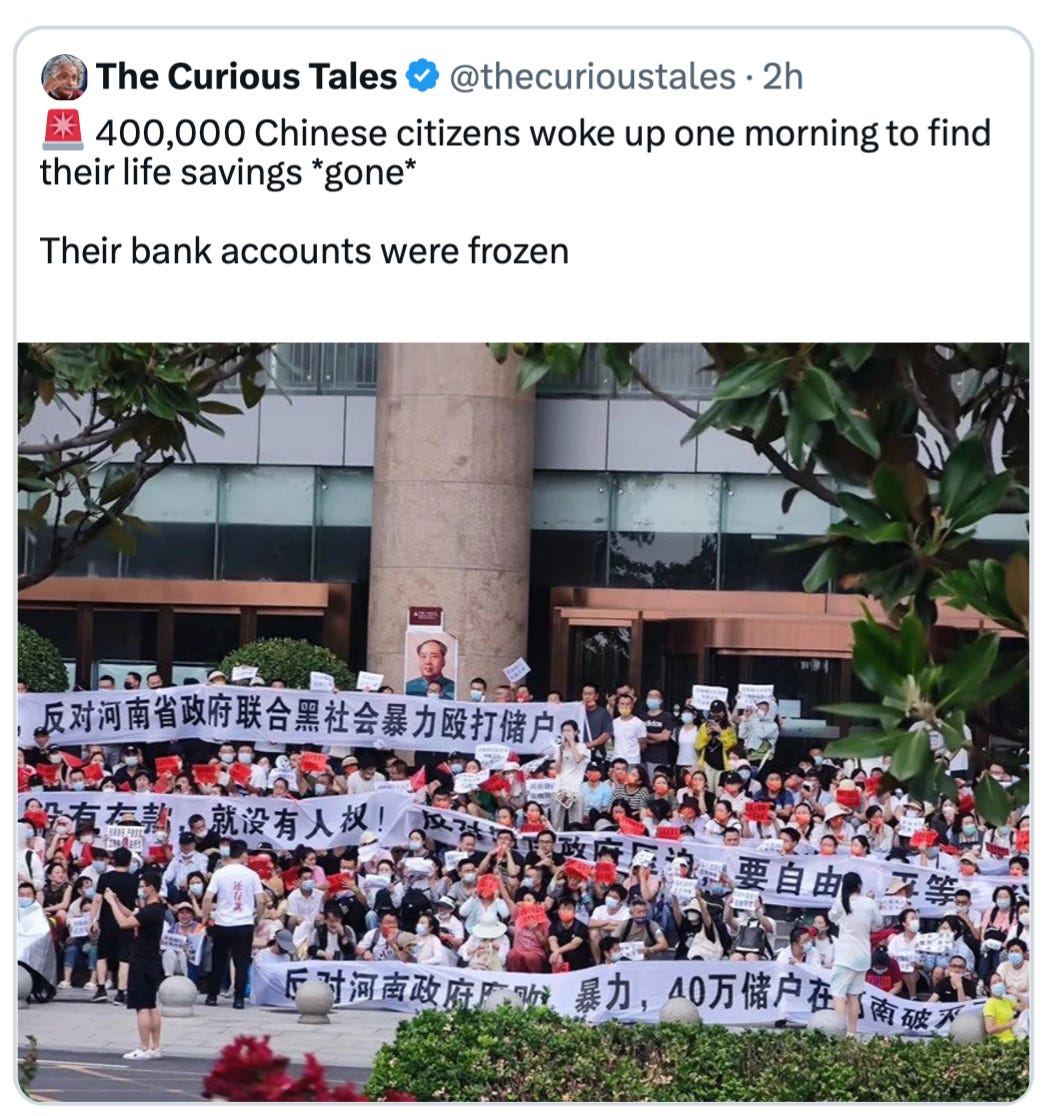
LOST PROMISES
Similar to the slick promises of a Washington politician, the digital yuan was touted as a powerful weapon against financial crime, claiming it would reduce fraud, stamp out money laundering, and curb tax evasion, problems that have long plagued both the government’s coffers and the ordinary citizen.
Beyond policing, the digital yuan was sold as a champion of “inclusion” (sound familiar?), reaching the millions of Chinese who remain unbanked, offering them a secure entry into the digital economy without needing a traditional bank account. The state also envisioned the digital yuan as a way to “streamline” everyday transactions, “cutting costs” by eliminating merchant processing fees and “increasing the efficiency” of the retail payment system across the sprawling nation; their version of the Chinese “carrot.”
This is what China’s social credit system promised:
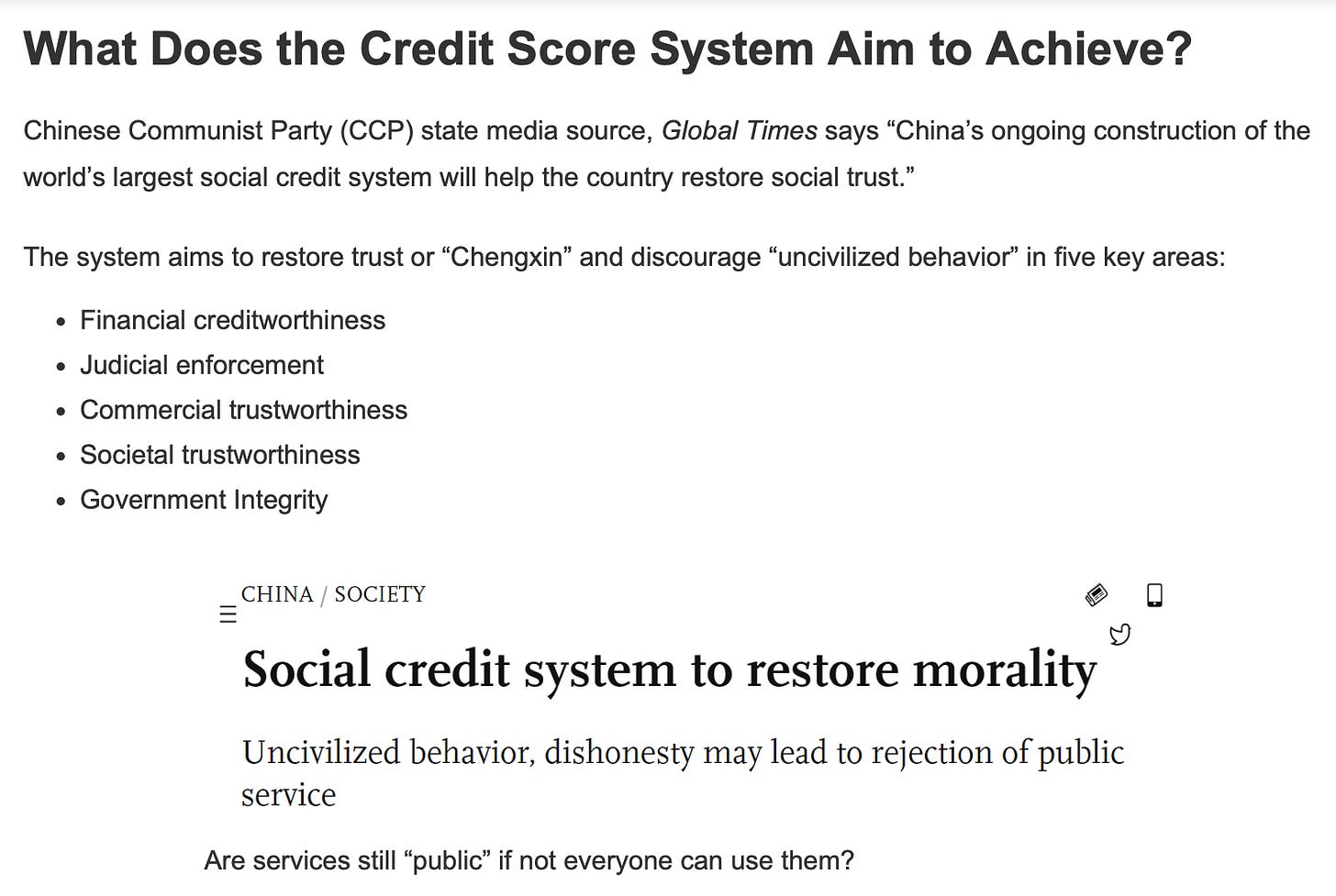
The promises were lofty: assist the poor and small businesses by providing smoother, fee-free payments and direct government subsidies into digital wallets, ensuring that money reached those who needed it most quickly and transparently.
If your social credit score dips, you don’t just lose privileges, you lose your digital wallet’s freedom. Transactions get frozen, purchases rejected, services denied. You’re effectively blacklisted, turned into a social pariah by the swipe of an algorithmic finger.
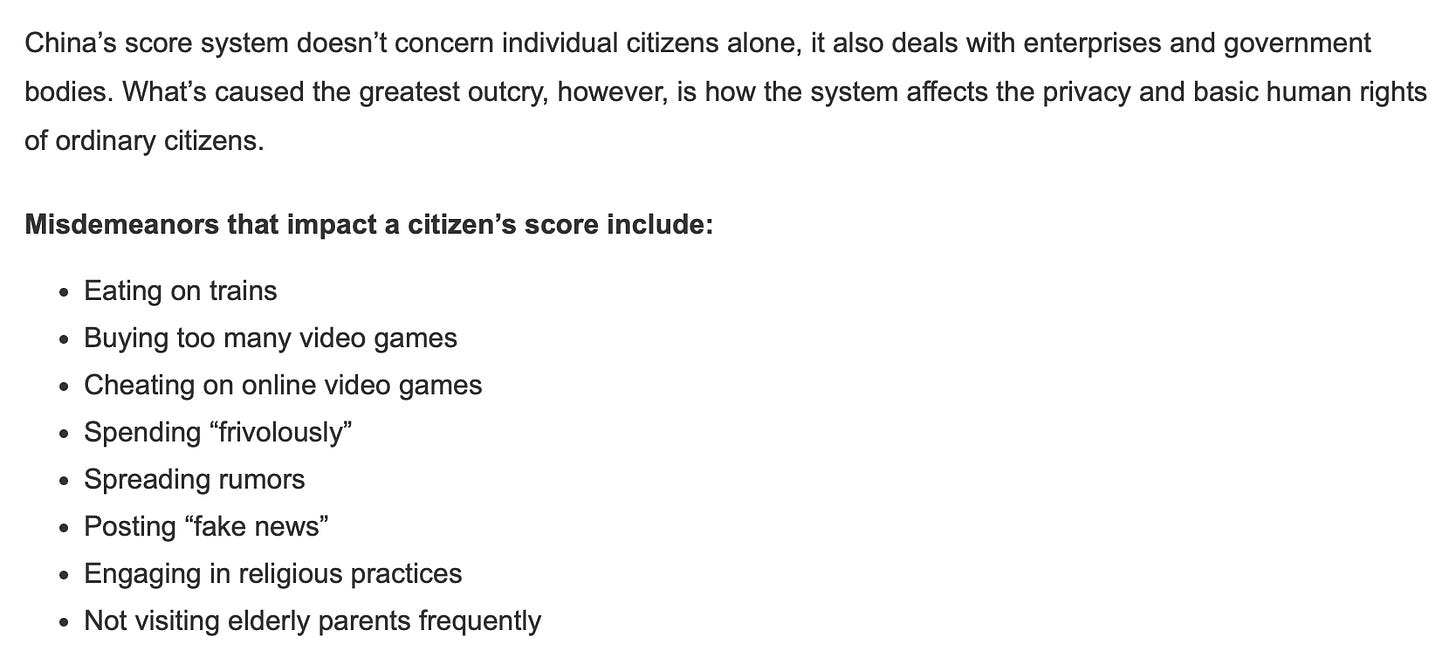
These are some of the infractions that chip away at your ability to travel and function day to day:
On the international stage, there was considerable discussion about the digital yuan enhancing China’s currency as a global reserve currency, facilitating faster, cheaper, and less dependent cross-border transactions, and a strategic move to challenge the dominance of the U.S. dollar.
If implemented worldwide, this is what the new era of global finance would look like for the rest of the world:
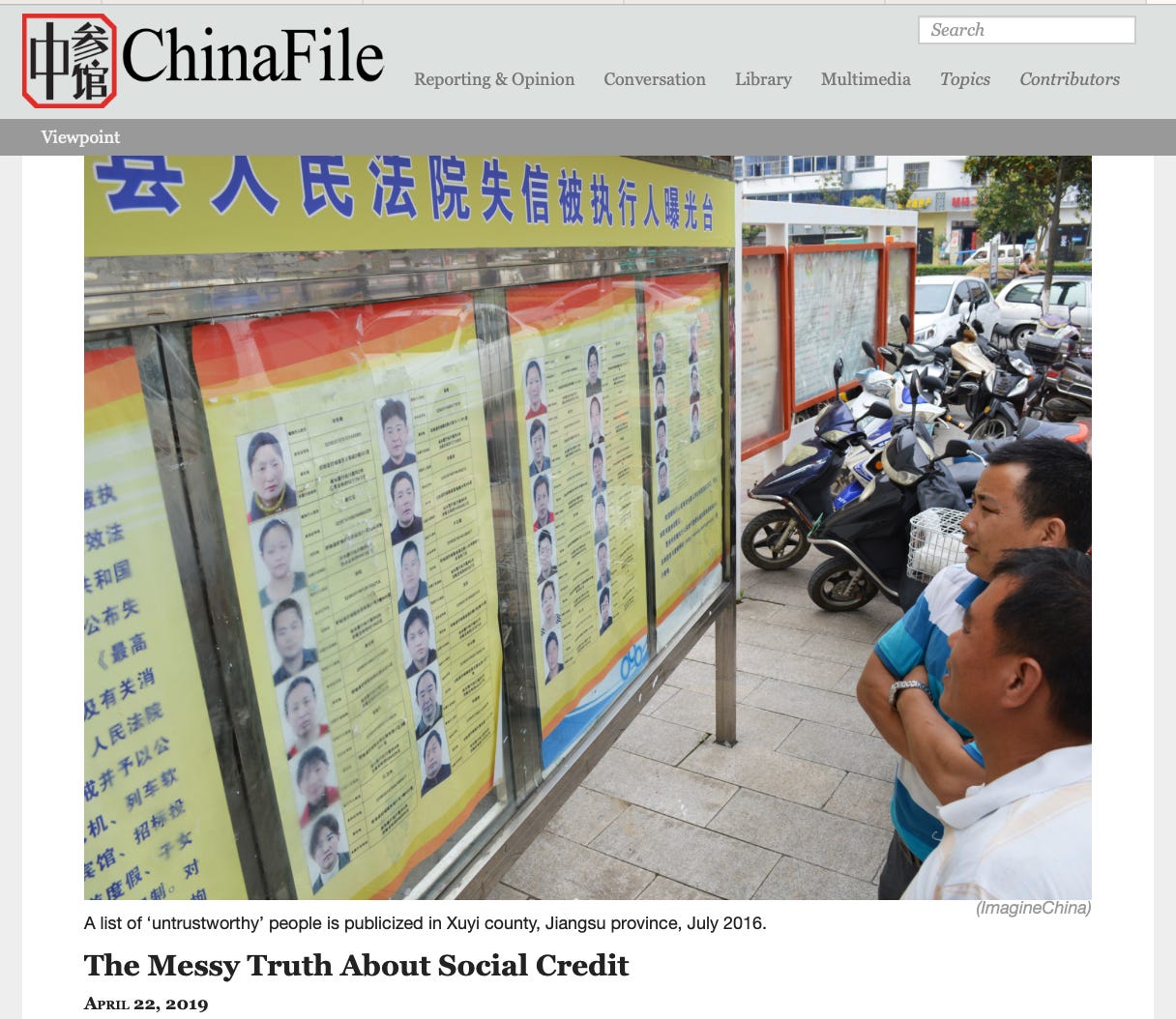
This isn’t vague dystopian speculation; it’s real life on the ground: the currency itself becomes a shackle, snapping tight around the wrists of anyone the state wants to keep “in line.” Want to hop on public transport or pay for government services? Not with a low social credit score. The digital yuan doesn’t just track your spending; it judges it, policing behavior in real-time and turning financial exclusion into social exile.
Because of low social credit scores, millions of Chinese citizens find themselves publicly humiliated, homeless, or without a job or familial ties because of minor infractions.

Without warning, millions of unsuspecting Chinese citizens have lost access to their ATMSs, bank accounts, security deposit box possession, access to their bank accounts, and cash disappeared and became illegal.
It’s a clever twist on control: make the money disappear, and you disappear too, invisible, silenced, and economically stranded. The outcasts of digital China aren’t just poor or rebellious; they’re the ones the system has decided don’t deserve to exist in its perfect, programmable society.
HOME SWEET HOMELESS
The catastrophic effects of this can now be seen throughout the urban streets of China. As of 2025, reports indicate there are approximately 24 million homeless individuals in China today; a staggering increase of about 5.3 times in just the last five years. This number dwarfs official figures from a decade ago; back in 2011, there were estimated to be roughly 2.4 million homeless adults, with some estimates putting the total homeless population at just over 3 million around 2015.
NOTE: Some reports and documentaries highlight millions facing housing insecurity and social exclusion linked to these systemic controls, but a direct causal number for social credit-related homelessness alone is unavailable, and the exact numbers are not available to the public.
While the digital yuan was initially sold as both a domestic tool of empowerment and an international symbol of China’s rising financial might, after the plan was rolled out, it quickly collided with public skepticism and grassroots resistance. Beneath the glossy state media portrayals, the people were humming a different tune. Chinese citizens aren’t buying it.
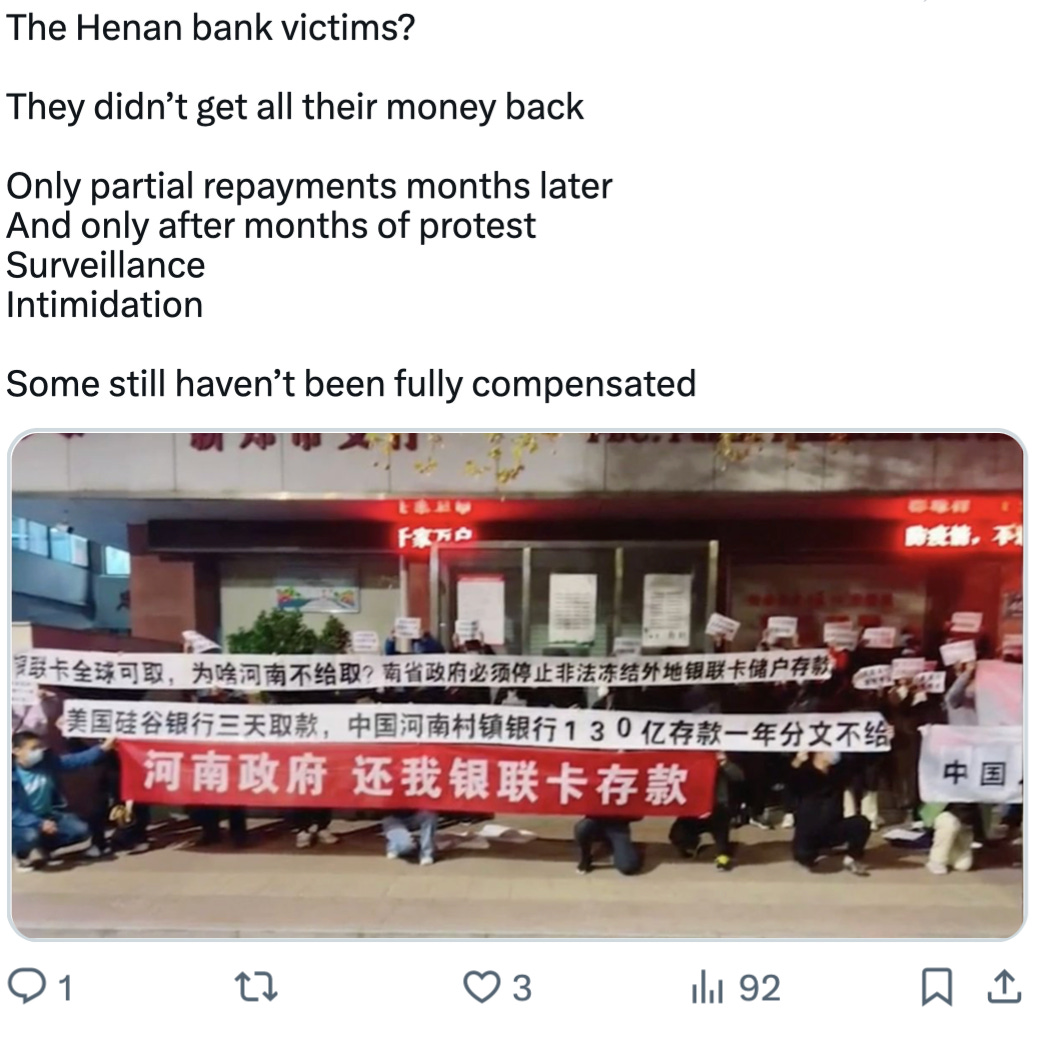
Unlike many Americans, the Chinese do not believe every word that their government says… and within this population, something has shifted. Seriously shifted.
THE REVOLUTION BEGINS
You won’t find this in major media or from Chinese media outlets, but on platforms such as Reddit and domestic Chinese social media, whispers of resistance grow, with many users sharing stories of freezing accounts, rejected transactions, and the rise of underground cash markets to bypass digital yuan restrictions. This backlash is described as a “digital tug-of-war,” with growing economic distrust and fear spreading quietly across neighborhoods, fueled by opaque government controls and surveillance tied to the currency.
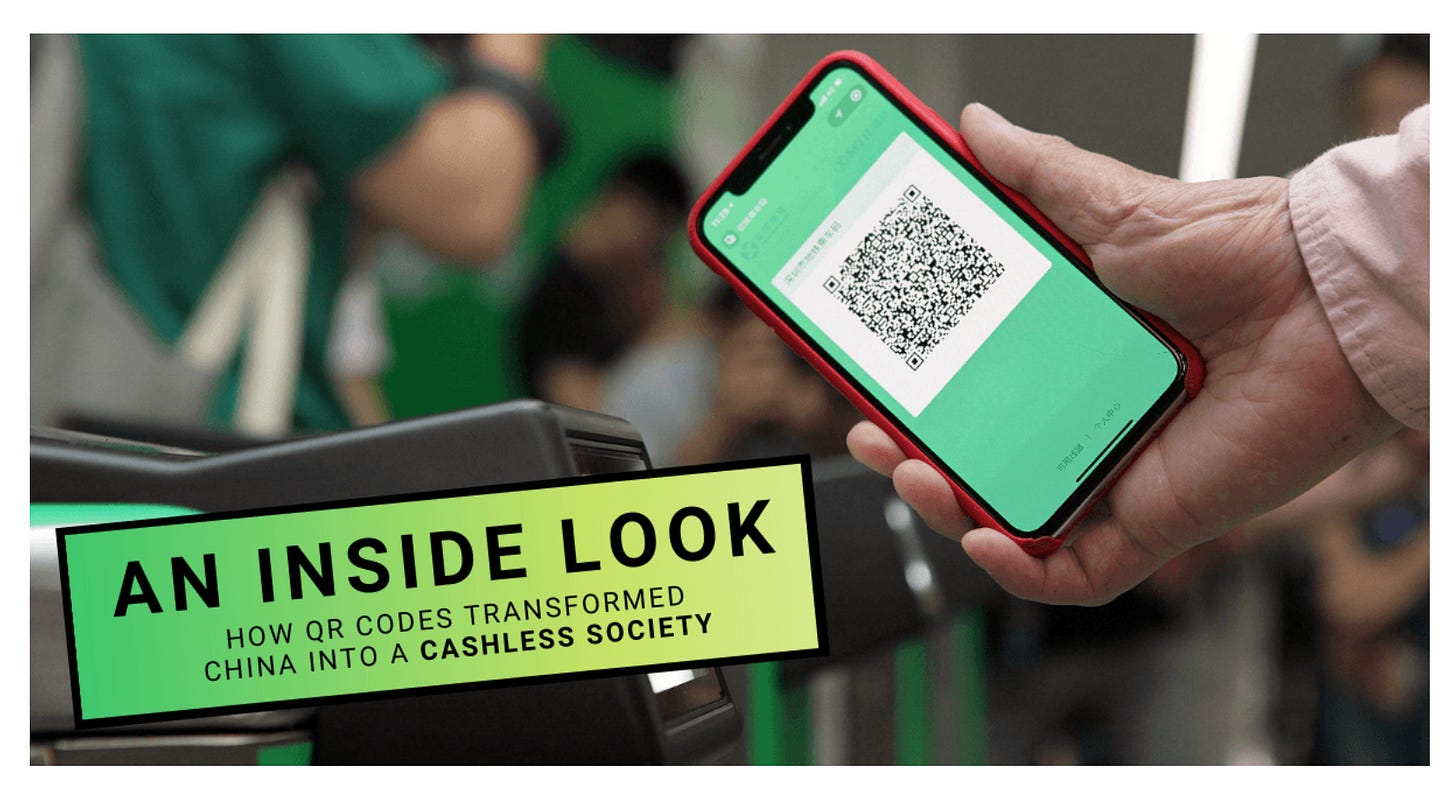
Today, merchants in bustling city markets are tearing down the government’s QR codes, rural vendors insist on cash, and delivery drivers, a critical artery of China’s urban economy, are rejecting the cold efficiency of the digital yuan for the messy comfort of bills stuffed in envelopes. “Cash only” signs are sprouting like weeds, signaling not nostalgia but quiet rebellion ( can’t tell you how this makes my heart sing). Rhythms of distrust beat louder with every frozen account, every denied transaction, every whispered fear online.
These individuals rejecting the digital yuan are not just pushing back for themselves, they are fighting for their friends, family, and co-workers who have been effectively “cancelled” from digital society. The digital currency’s behavioral controls have created an invisible caste system where “non-compliant” individuals risk economic exile, unable to participate fully in daily commerce or even access basic services. The people pushing back aren’t lone rebels; they are a collective army of everyday citizens refusing to let their friends and families become ghosted by the new digital regime.
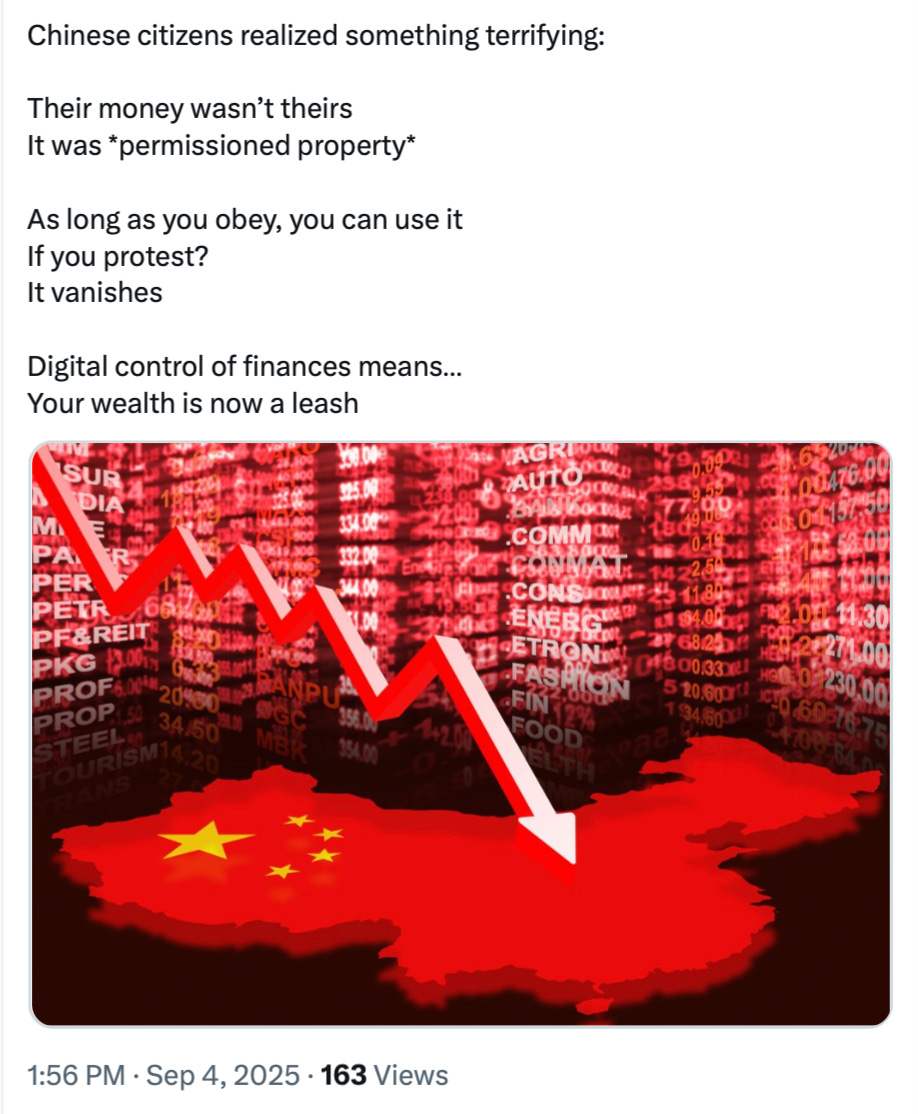
This rejection is more than inconvenience, it’s a symptom of a broken contract. If Beijing thought tight command could mandate currency adoption, it underestimated the popular instinct to preserve anonymity and control over personal money. The state’s digital leash has found itself tangled, a cautionary knot in the fabric of mass compliance.
What does this mean beyond China’s borders? For the rest of the world, watching and perhaps plotting their own digital currency ambitions, the lesson is stark and simple: If one of the most controlled societies on earth can’t get its people to buy in, literally or figuratively, no one can. Governments from India to Brazil and beyond are recalibrating, some pausing their central bank digital currency (CBDC) rollouts, others pruning back features to avoid Beijing’s vault-like control.

100TH MONKEY EFFECT
I’m praying for the “100th monkey effect;” that idea that when enough individuals adopt a behavior or belief, it suddenly catches fire and becomes mainstream, lurks just beneath this monetary mutiny. China’s resistance might be the spark, the first critical mass. As more citizens refuse digital currencies, opting instead for cash or barter, this quiet revolt could escalate globally, spreading like wildfire across borders and cultures.
This is why my recent Substack post, The Roadmap Out of the Matrix, is critical to read in preparation for our revolt against this incoming “economic system upgrade” attempt.
IMAGIN’ ALL THE PEOPLE
Imagine dinner tables in Guangzhou sharing growing skepticism, which spreads to cafes in Paris, community centers in Nairobi, and farmer’s markets in Iowa. Each unscanned QR code, each unspent e-CNY note, is a tiny defiance that builds to a communal shrug as the old ways and distrust of surveillance intersect with new technologies.
This isn’t just a Chinese problem; it’s a planetary moment of hesitation, a reckoning with the limits of control, trust, and human impulse.
The implications for global leaders are huge. Central banks are watching this drama unfold like hawks. The dream of programmable money, promising efficiency and control, now faces the fragility of trust. One false move, one misread cultural heartbeat, and the whole digital currency initiative risks collapse, replaced by parallel economies, underground barter, and widespread defiance.
The Chinese digital yuan experiment pulls back the curtain on a vital truth: technological innovation can’t simply bulldoze over human nature. Control requires consent, invisible tether breed rebellion, and trust is the currency that powers economies more than any digital algorithm ever can. In a world where governments want to rule the monetary flow like an iron fist, the message from China is clear, resistance is organic, contagious, and, ultimately, unstoppable.
However, this silent revolution will certainly come at a cost (think 1989 Tiananmen Square massacre). This totalitarian communist government will not capitulate without a fight. A full-blown revolution will undoubtedly be necessary to kill this wicked scheme once and for all.
SAME PLAN, REST OF THE WORLD
China’s plans are on the table for the rest of the world.
WEF’s advisor and trans-human advocate,Yuval Noah Harari, is one of the dark architects behind the plans of our digital future. Harari has not been shy about the direction elites hope to steer society: he’s gleefully described social credit systems as expanding the monetary value of absolutely everything you do, with digital surveillance granting technocrats the unprecedented ability to enforce conformity, measure every action, and decide, algorithmically, who’s a good citizen and who gets left behind.
Harari’s bleak cautionary tales stand as both warning and, for some at WEF, a roadmap: in his words, even the most iron-fisted regimes of the past could not track every citizen, every hour of the day, but with enough data, AI, and digital money, and, “voila!” that invisible leash tightens around every life. The stated intention, echoed in WEF and central banking circles, is to “modernize” and “program” money so it doesn’t just facilitate exchange, but polices behavior and compliance, much as China’s program tried (and is now, gloriously, backfiring). This vision is sold under the banners of efficiency, safety, and “inclusion,” but the risk is a programmable America in which the same invisible fences now fraying in Guangzhou are quietly constructed on Main Street, USA.
Let’s pray the freying continues.
HOPE FOR THE FUTURE? IT’S UP TO US
As for us; the emerging U.S. Central Bank Digital Currency (CBDC) might be dressed in stars and stripes, but its chains are forged from the same cold metal: behavioral scoring, exclusion, and trust engineered by black-box algorithms, not communities or conscience. Now is the time to destroy every digital chain before it’s ever fitted around another neck, because, as history shows, once the boot lands, reclaiming trust and freedom becomes a revolution, one whisper at a time.
RELATED COLUMN:
The Great Silence: China’s Vanishing Population and the Collapse to Come

Something strange is going on in China.